
MUSIC COMPOSITION LESSONS - Madison, WI
Beginners to College Prep
MUSIC COMPOSITION INSTRUCTION
The creation of sound is at the heart of all musical experiences. It is usually what compels us towards playing an instrument from the very beginning. Composition of music blends these sounds with feeling, intellect, life experience and personal expression in the most truly fulfilling and satisfying of ways. I am here to help guide you in this creative process, whether that means starting from the very beginning or providing constructive feedback on a work in progress. The mission of these lessons is to help you find and develop your creative voice, find strategies for composing, and to see pieces of music to completion.
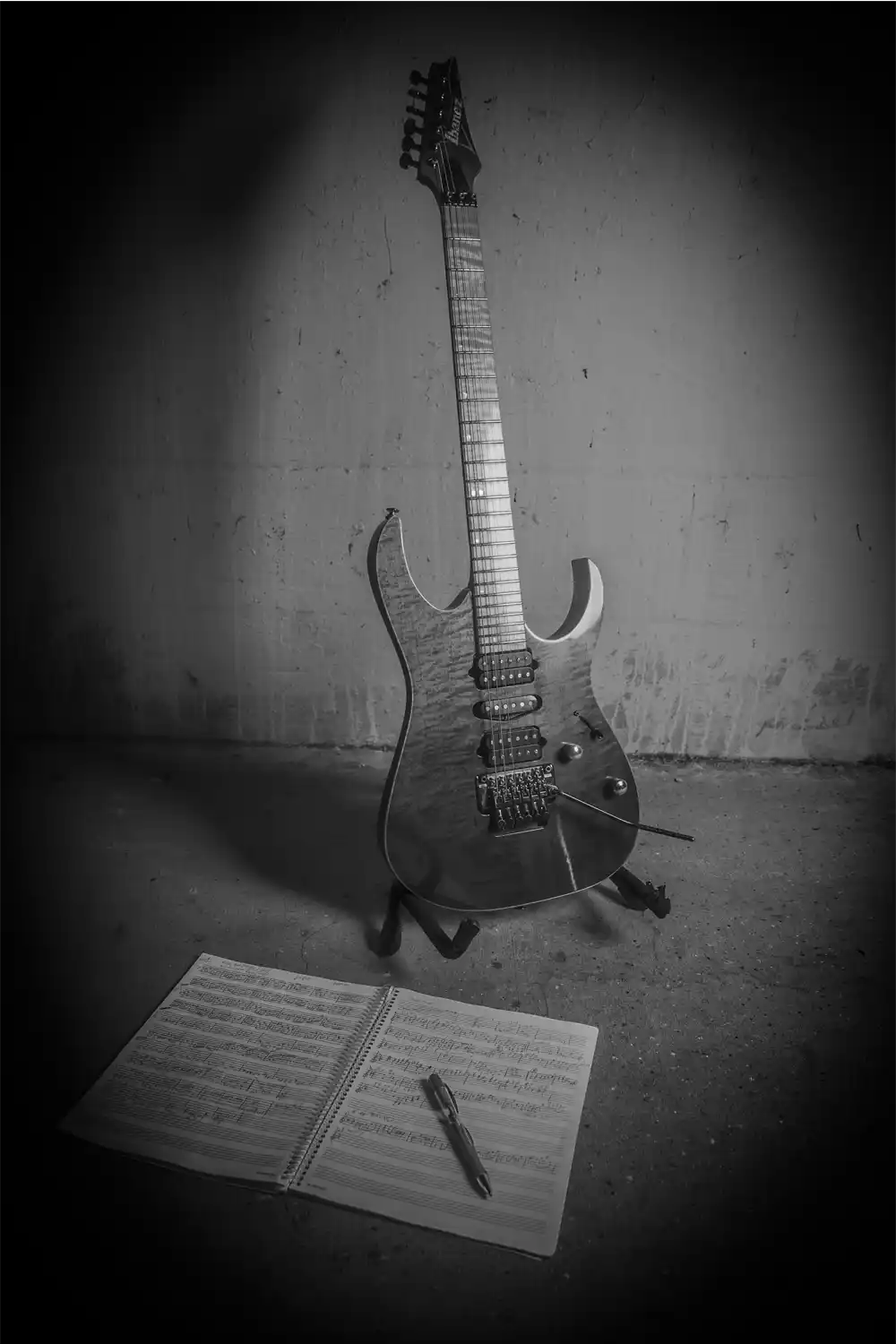
Your Music. Your Voice. Let's Build It.
What I Teach
- Development and refinement of musical ideas and riffs
- Application of Music Theory for Melody and Harmony
- Use of DAWs and notation programs
- Analysis of song forms, tones and musical effects
- Finding your own compositional voice
Lesson Formats
- Weekly lessons
- 30 minute intervals
- Online lessons
- Beginner to intermediate
- Intensive study on the collegiate level
MUSIC COMPOSITION FAQ
I'm a complete beginner, where do we start?
We will begin with the basic elements of music and how to be creative with them.
Do you work with younger students?
I will work with students in Composition as young as 6 if they demonstrate an interest music creation.
I'm preparing for college music can you help me prepare?
Yes. We will go over fundamental knowledge to have in place, and making a plan for any requirements for the college you are looking at.
How do the lessons work, what do I need to prepare for each lesson?
Each lesson will discuss a concept of creation and idea generation. We will either continue work on a piece that is in progress, or come up with a series of small goals and assignments for the next lesson.
What do I need to bring to the lessons?
Composition and some sort of musical notation usually go hand in hand. You’ll want to bring whatever is necessary to demonstrate what you are working on. This could include staff paper, a laptop with DAW, a recording or an instrument.
Do I need to be able to read music?
Not necessarily, but it is helpful and encouraged. The creative element can be approached from many different angles, and I can still help you to find your own strategies for writing.
What happens if I have “Writer’s Block”?
We will discuss strategies on how to work around that and generate ideas. Composition can be practiced in a similar fashion to any instrument. Trying to write and create something everyday will help you develop work flow and improve the creative process.
I’m hesitant to show my work to other people, are you going to tear my creation apart?
No. Presenting something you’ve written to other people, or opening yourself up to critique can definitely be scary and intimidating. It can feel incredibly vulnerable sometimes. We will discuss different aspects of your composition with an emphasis on objective language. I avoid judgmental and qualitative statements (good, bad, brilliant, stupid, etc.) and focus on the mechanics and details of the writing itself.
Do you teach with any kind of composition software?
While I am primarily versed in Finale for notation and Logic for recording, we can work on learning any notation program or DAW (Digital Audio Workstation) for your process.
Do I need to play an instrument to learn how to write music?
Not necessarily, but a background or foundation in some sort of instrument is helpful.
“There’s no reason for a guitarist to have a big ego. You should love the instrument more than wanting to be a rock star””